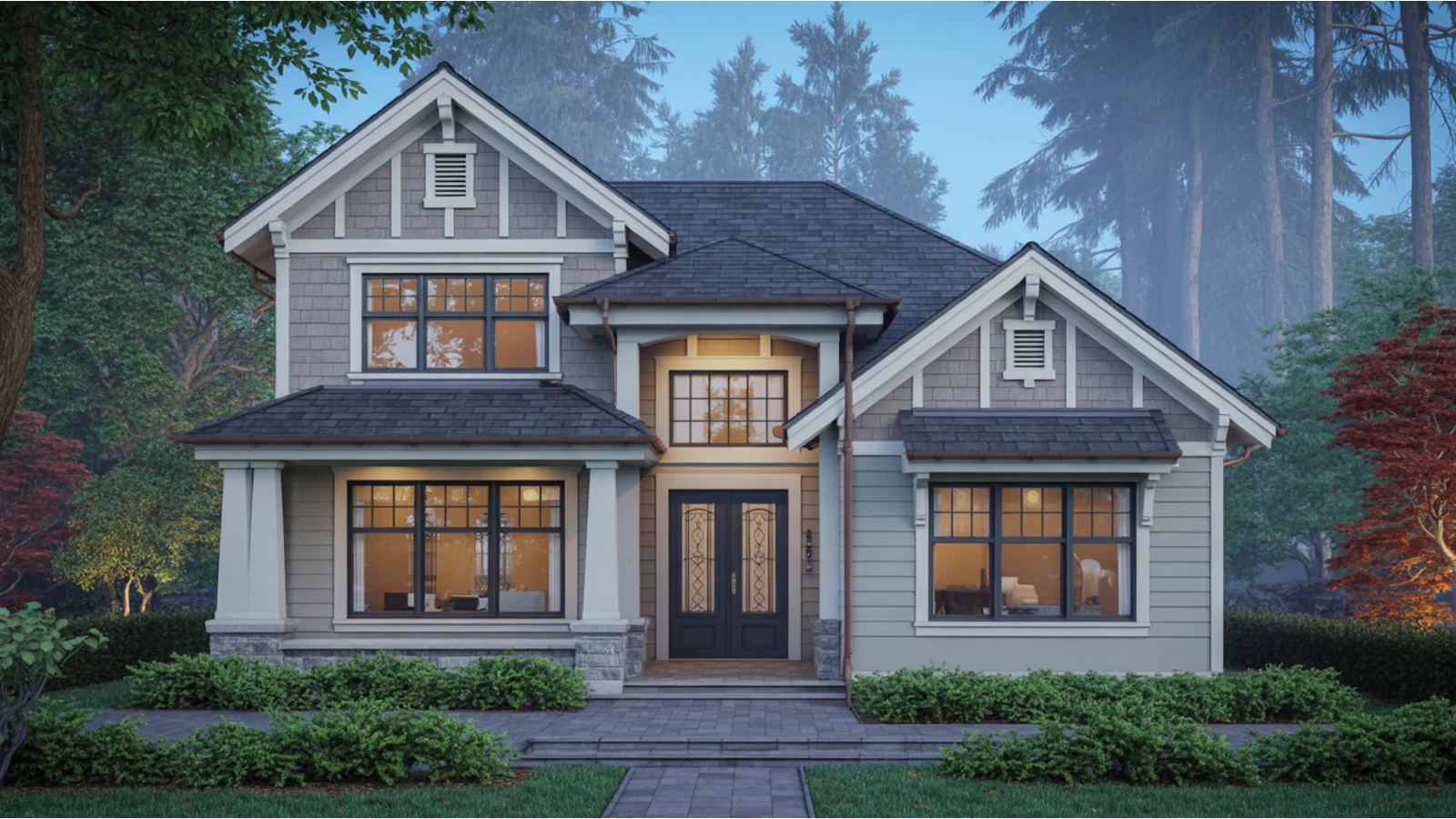
Miyabi at Frog Pond — walking the Kanazawa model
A tour-with-Kaz read-through of the Kanazawa floor plan at Miyabi at Frog Pond. What stands out, what the model home hides, and what to actually ask the on-site agent.
The Kanazawa is the entry plan at Miyabi at Frog Pond — 2,552 square feet, four bedrooms, three bathrooms, two-car garage, starting price $789,990. It's the plan most first-time visitors walk, and for good reason. It's the plan that does the most work demonstrating what an Ichijo home actually feels like before you've made any decisions.
What follows is a walkthrough as Kaz would do it, in order, with a buyer she knows.
At the door
Stop before you go in. Look at the front elevation. Ichijo's exterior detailing is more articulated than a production builder's — the trim around the door, the depth of the eave, the texture of the siding. These details are part of the price. They'll outperform painted hardboard for both weathering and resale visual appeal at the 10-year mark.
Touch the front door. Listen when it closes. Ichijo's doors are dense. The hinges are heavier-duty than what you'll find on most production homes. Small detail, but it foreshadows what's behind the walls.
Foyer and great room
The first thing the model home is selling is the open-concept flow from the entry through the great room to the kitchen. Pay attention to:
- Ceiling height. The Kanazawa is single-volume in the great room — no two-story atrium, which keeps heating efficient.
- Window placement. The south-facing wall is glass-forward to maximize Oregon's gray-day light. Walk past the windows and feel how little draft there is. Ichijo's airtightness rating shows up here.
- Floor transition. The transition from entry tile to engineered hardwood is one of the spots where a builder cuts corners or doesn't. Look for tight reveals.
What the model home is hiding: the standard furniture package makes the great room feel larger than it is. Bring a tape measure if your living room sofa is over 84 inches.
Kitchen
The kitchen is where the upgrade-vs-standard distinction matters most. Ichijo's standard cabinet package is good — piano-finish faces, soft-close on doors and drawers, magnetic stops on the under-cabinet doors. The model usually shows a step up.
Ask the on-site agent: "What in this kitchen is included in the base price for a Kanazawa, and what's an upgrade?" Get the answer in writing. The right answer should mention:
- Counter material (the model is usually quartz; verify what's in base)
- Backsplash (model is often a feature tile; verify what's standard)
- Hood (the chimney-style hood is often an upgrade)
- Pantry depth (depth varies in some elevations)
Primary suite
The Kanazawa's primary suite is on the main floor. This is one of the plan's strongest selling points — it's a single-story-living-friendly layout in a multi-bedroom home, which is rare in this price range.
What to check:
- Closet depth. Walk in, hands at your sides. If the wall hits your fingertips, the closet is shallow.
- Bathroom-to-bedroom path. Cross the bathroom in the dark, mentally. Are there sharp corners? Is the toilet area private enough?
- Window over the tub. Ichijo often does this. It's beautiful in the model, slightly less practical in February rain.
Upstairs bedrooms and the bonus question
The Kanazawa's three secondary bedrooms are upstairs along with a shared hall bath. Two are good-sized; one is smaller, often configured as a study or nursery. Ichijo doesn't include a bonus room in the Kanazawa — that's where the Kitakata, Naha, or Okayama plans pick up.
If you have school-age kids who'll outgrow a study, ask whether the Kitakata or Himeji floor plans are available at price points close to the Kanazawa's. Sometimes a lot premium on a Kanazawa lot would put you within reach of a Kitakata on a base lot.
Garage and storage
The garage is the place where Ichijo's engineering shows up in less obvious ways:
- Insulation. The wall between the garage and the house is more heavily insulated than industry standard. Reach up and tap the wall — it sounds different from what you'd hear on a production builder's garage wall.
- Pre-wiring. EV-ready conduit run to the panel is included; verify with the on-site agent.
- Storage above. Truss design allows for overhead storage in part of the garage; some plans include the platform, some leave it to the buyer.
What to bring to the second visit
Walking the model once is reconnaissance. The second visit is when you bring Kaz and a list. The list should include:
- The exact lot you want, with the lot premium spelled out
- The plan and elevation you want, with the base price confirmed in writing
- Any standard-vs-upgrade clarifications from the first visit, now confirmed
- Your lender's pre-approval for the price you're targeting (or a builder-lender Loan Estimate ready to compare)
- Specific questions about the incentive package — Flex Cash, rate buydown, design-center credit
The first visit is the model talking. The second visit is the contract starting.
Tour with Kaz
Get registered before your first visit so your representation is preserved.
Request a community tour